
Global bond yields are reaching levels not seen in nearly two decades, creating a threat to economic and financial stability around the world. It’s a threat that has been exacerbated by US policies.
On Monday, Japan’s 10-year bond yield hit a 30-year high of 2.95 per cent amid expectations that the Bank of Japan will raise its policy rate later this month. US 10-year yields also rose, despite the perceived “hawkishness” of the Federal Reserve Board’s chair Kevin Warsh at the weekend’s annual meeting of central bankers and economists at Jackson Hole in Wyoming.
In France, Germany, Italy, Spain and the UK, yields on benchmark 10-year government bonds are at levels last seen before the 2008 financial crisis. Here in Australia, the 10-year bond yield is at its highest level in a decade and a half. Only in China, with growth slowing markedly and expectations of an imminent monetary policy easing, have yields been falling.
The worldwide spike in yields has been occurring across the backdrop of swelling levels of global debt.
The Institute of International Finance (IIF) earlier this year estimated that global debt levels had surpassed $US350 trillion ($488 trillion), or 305 per cent of global GDP, with public sector debt of about $US111 trillion.
At the core of the global bond system is the US Treasury market, where the yield on 10-year bonds has risen from its pandemic-era low of less than 60 basis points in 2020 to 4.75 per cent as US government debt has ballooned from about $US26.5 trillion to more than $US40 trillion.
The rest of the developed world is confronting much the same problem, with the soaring interest costs on vastly increased levels of debt threatening fiscal stability.
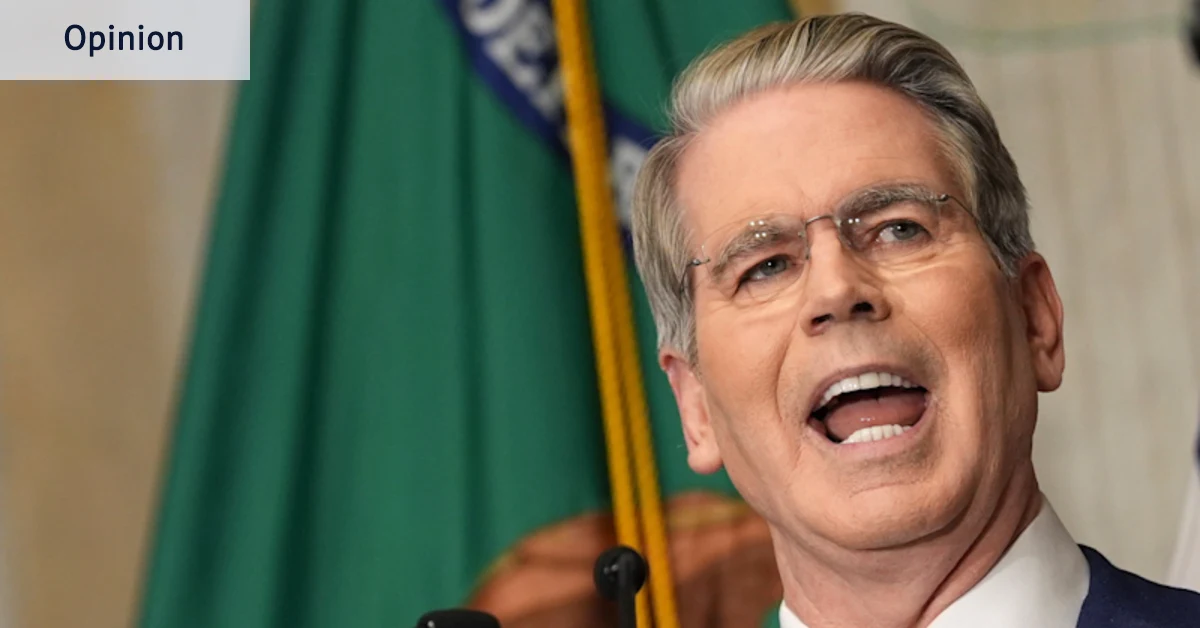
US Treasury Secretary Scott Bessent said this week that the only way to manage the exploding debt levels was to grow economies, but that’s more easily said than done.
The debt burdens are a legacy of the pandemic era when government spending exploded around the world. On the IIF’s numbers, about $US100 trillion in debt has been added since the end of 2019. On the International Monetary Fund’s numbers, the rise in gross public sector debt has been from about $US74 trillion to more than $US126 trillion over that period.
Whichever set of numbers is used, global debt is now two to three times the size of the global economy, with gross government debt in most of the developed economies approaching or above their entire economic output. In Japan, it exceeds 200 per cent of GDP; in the US, excluding intra-government holdings, it is about 100 per cent.
When, during the pandemic, yields were negligible, the build up in debt wasn’t threatening. Yet today, as the cost of servicing the debt is soaring, it absolutely is.
While Bessent might see economic growth as America and the world’s salvation, the Trump administration has worsened the already weakened finances of the world economy.
If the pandemic bears the primary responsibility for the initial surge in the debt levels, the impact of the war in Ukraine on Britain and Europe, and the Trump administration’s trade wars and its ill-fated decision to join Israel in attacking Iran have exacerbated the financial pain.
On the eve of the launch of the war in the Middle East, the US 10-year bond yield was 3.94 per cent. It’s now 4.75 per cent. Developed economies’ government bond yields have spiked in a range between 46 basis points (Australia) and 96 basis points (France) over that same period.
Yields had already been rising before the war created the biggest energy shock in history in response to the post-pandemic outbreak of inflation that flowed from the severe disruption to global supply chains, an outbreak worsened by central bankers’ initial belief that the burst of inflation would be transitory as supply chains normalised.
Add to that the costs of Donald Trump’s trade wars, the dramatic increases in energy costs of his war in the Middle East and the profligacy of his administration (he’s added about $US4 trillion debt in this term, so far) and what it has done to yields in the world’s most influential financial market, and the ingredients for a global financial squeeze on economies are all in place.
Bessent’s hoped-for growth might be the answer – the US administration is placing a lot of faith in the artificial intelligence boom and the associated massive infrastructure spending to generate growth – but, in the near term, the companies behind that spending are increasingly turning to debt to finance it and competing with governments for investors’ funds.
Not only is that another influence driving yields higher, but it is adding risk to global debt markets and, in particular, the US financial markets and economy. There’s a lot of leverage being built into the AI ecosystem, which also has a raft of financial interdependencies between the key players.
With AI investment accounting for about a third of the relatively modest US GDP growth rate of just over 2 per cent, a slowing of the investment would undermine Bessent’s escape path from the US debt trap, even if there isn’t a meltdown of the sector.
That overhang of global debt explains why there is a lot of discussion of currency debasement and fiscal dominance – allowing currencies, particularly the US dollar, to lose value and the combination of depreciation and inflation, and the ensuing transfer of wealth from investors to debt issuers, to reduce the fiscal burdens for governments.
Bessent has been trying to buy time for his hoped-for growth to emerge and help lower the government’s $US1.2 trillion (and rising) annual interest bill.
He’s announced that the US Treasury will buy $US4 billon or more of the government’s longer-duration bonds to try to cap their yields and lower the government’s borrowing costs. In a $US31.5 trillion market for US government debt – of which about a third of which has matured or will mature this year and have to be refinanced– that’s likely to be a futile attempt.
He’s also intervened, alongside the Bank of Japan, to try and strengthen the Japanese yen in an attempt to keep it above 160 yen to the dollar.
That was driven by a fear that, if the Bank of Japan has to either use its foreign currency reserves to defend the yen, or raise Japan’s interest rates to put a floor under its value, a flood of Japanese money now invested in the US – about $US1.1 trillion of it in the Treasuries market – could exit the US market, pushing US bond yields even higher.
With most of the developed economies running large budget deficits – America’s is about $US2 trillion, or almost 6 per cent of GDP – their finances aren’t stabilising and in most cases are deteriorating, with the compounding of the interest costs of their borrowings increasingly threatening to crowd out other spending and, potentially, to threaten financial stability.
While Bessent might see economic growth as America and the world’s salvation, the Trump administration has worsened the already weakened finances of the world economy.
With no neat end to the war in the Middle East within sight, Trump routinely announcing new trade wars and sanctions on social media, and the Fed under pressure to raise, not lower, interest rates, a global growth spurt of the magnitude needed to stabilise the US and other countries’ public finances is likely to prove illusory.
The Market Recap newsletter is a wrap of the day’s trading. Get it each weekday afternoon.