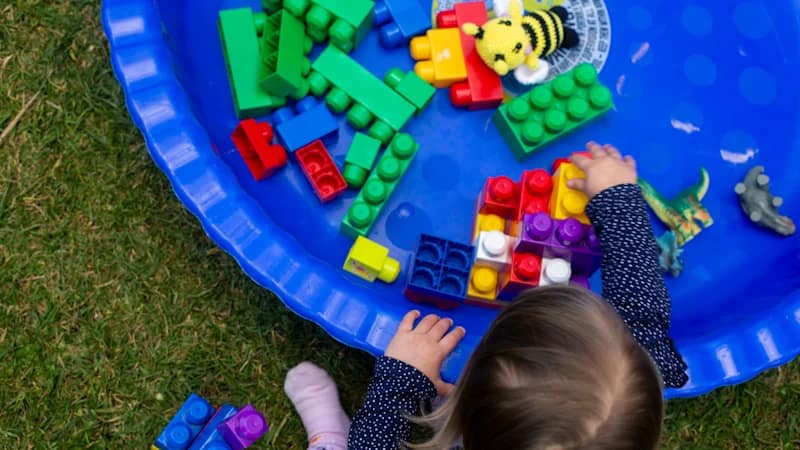

Parents will pay more for childcare after the government increased the cap on fees under its $3.6 billion deal to keep propping up worker salaries.
The government staved off a national strike, pay cuts for workers, and fee hikes by extending the worker pay funding in a move that was widely welcomed by the sector.
But parents still face rising costs after the maximum amount centres can raise fees was lifted, adding hundreds of dollars to the annual cost for most working families.
Centres that receive the taxpayer-funded subsidy, which gives a 15 per cent pay rise to childcare workers, were originally required to limit fee increases to between 4.2 and 4.4 per cent under a funding pledge due to expire this year.
Earlier this month, the government agreed to extend the wage subsidy for another two years, but with an increased fee cap of 5.8 per cent. The cap is calculated based on the expected costs of providing care, which are expected to rise after a national crackdown on safety standards following a slew of revelations of child sexual abuse by childcare workers.
Advocates are warning many parents’ budgets are at breaking point, even as the government guarantees three days of subsidised care for every child. Childcare is one of the fastest-growing imposts on the budget, with the subsidy costing almost $16 billion a year.
The latest data from the Australian Bureau of Statistics revealed childcare costs rose 9.4 per cent in the past year – more than double the rate of headline inflation.
Childcare costs vary across Australia, while access to the subsidy depends on a family’s income. Based on average fees in NSW, a family earning $120,000 a year putting one child in care three days a week can expect to pay up to an extra $211 per year, based on the government’s subsidy calculator. Fees for a family earning $270,000 could grow up to $497 annually.
Georgie Dent, chief executive of advocacy group The Parenthood, said the childcare subsidy model had reached a difficult point where parents could not afford to pay more for childcare, while providers had little choice but to keep raising fees.
“We’ve campaigned for a different funding model for a long time,” Dent said. “Taxpayers are spending $16 billion, out-of-pocket costs remain exorbitant for many households who are already seriously squeezed, access is patchy depending on your postcode and quality isn’t uniform.”
She said providers, particularly high-quality not-for-profits that invest more in their workforce, were under pressure as the cost of doing business and safety compliance demands have grown simultaneously.
“It’s a delicate balance because fixing it means fees go up and that’s hard for families … Parents simply can’t absorb another increase.”
Dent noted that a potential 5.8 per cent fee increase was preferable to parents funding the full 15 per cent pay rise for childcare workers.
Opposition childcare spokesman Matt O’Sullivan said Labor had failed to bring down the cost of childcare as promised.
“Families are paying 27 per cent more [since Labor took office]. They’ve raised the fee cap, costs are still soaring, and there’s no end in sight. This is another Labor lie,” the senator said.
Education Minister Jason Clare said fees had grown by 49 per cent under the previous Coalition government, and the fee cap was working to keep costs down.
“Fees have risen by half as much at centres receiving the payments as centres that don’t,” he said.
 Brittany Busch is a federal politics reporter for The Age and Sydney Morning Herald.Connect via email.