

LG Display says its new FLiPP OLED technology can make displays last 2.4 times longer than panels made with conventional fine metal masks under the same conditions. It also claims a 1.6x increase in brightness while cutting power use by 13%.
LG Display plans to bring FLiPP to IT products such as monitors and tablets first, which gives the technology a fairly direct path from the lab to products people might actually buy.
That puts OLED monitors near the front of the line for testing whether those numbers hold up once FLiPP moves into mass production.
How FLiPP changes OLED production
Most OLED panels use fine metal masks to deposit red, green, and blue material in precise locations. As panels get larger, LG says those masks can sag enough to cause alignment problems and color-mixing defects.
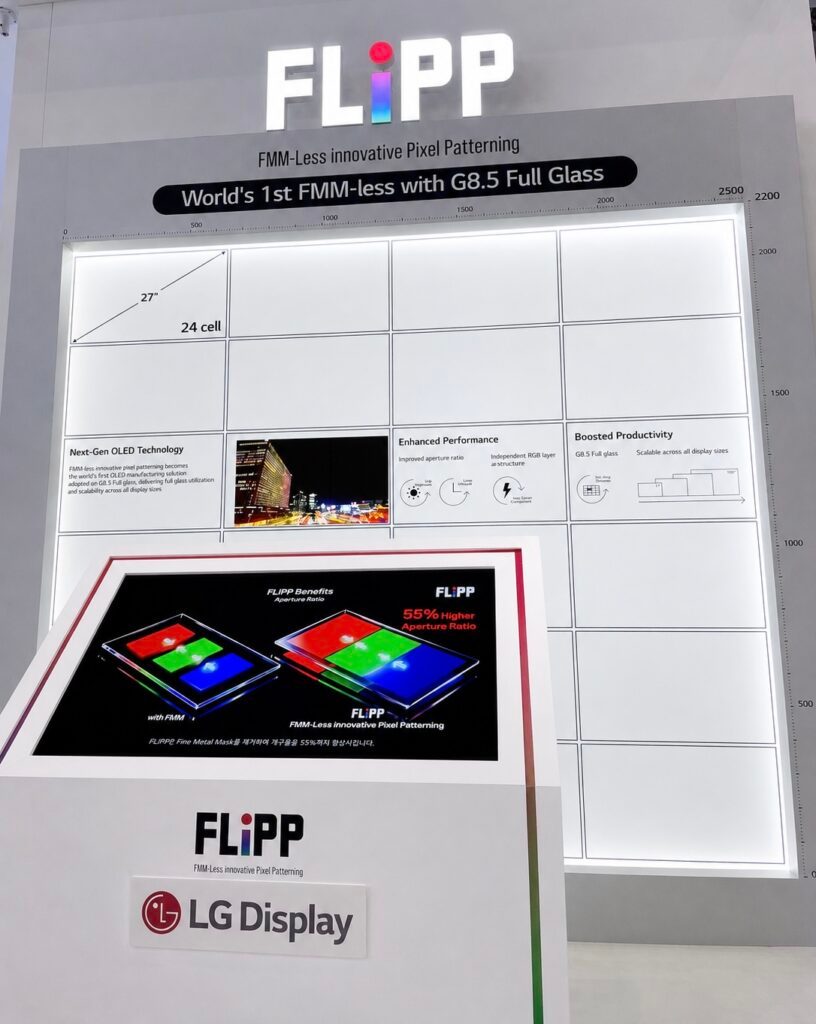
FLiPP gets rid of the mask. LG instead deposits the RGB materials in sequence and uses photolithography with UV light to remove unwanted areas. The process increases the usable pixel area by about 55%, giving LG more room to push brightness and longevity without increasing power consumption.
Why monitors are first in line
FLiPP also gives LG Display more flexibility over panel size and resolution. The company says the process can theoretically work on displays ranging from 1 inch to 100 inches, but monitors and tablets are the first categories on its roadmap.
Production could become more efficient as well. LG says FLiPP can use an entire 8.5-generation mother glass substrate instead of cutting it into smaller sections, improving glass utilization by as much as 64% for equivalent laptop panels.
That sounds promising for manufacturing costs, but there’s no guarantee any savings would show up in retail prices.
When will FLiPP reach actual products
For now, FLiPP remains a technology announcement rather than something you can buy. LG Display hasn’t named any monitor or tablet partners, and it hasn’t given a commercial release date.
So the first FLiPP monitors and tablets will have plenty to prove. They’ll show whether LG can reproduce those gains at commercial scale and, more importantly for buyers, whether the technology produces an OLED upgrade you can actually notice outside a spec sheet.


