A quiet transformation is happening inside America’s largest corporations. And actually, most people have no idea it is occurring.
The pension funds and 401(k) plans covering millions of American workers are increasingly being handed over to Wall Street‘s elite firms to manage. Why? It’s like the companies sponsoring those plans no longer believe they can do it themselves.
The trend is now impossible to ignore. Goldman SachsGS) confirmed July 9 that it had won mandates to manage a combined $70 billion in retirement assets for two of America’s most iconic companies: Verizon Communications Inc. (VZ) and Lockheed Martin Corporation (LMT).
The deal includes approximately $30 billion in pension assets for both companies and approximately $40 billion in Verizon’s defined-contribution retirement assets, typically 401(k) plans, according to Goldman.
No, it is not routine portfolio management. It is one of the largest corporate investment outsourcing wins in recent history, and it tells you something important about where the entire asset management industry is heading.
Goldman Sachs GS) confirmed the announcement on July 9. The firm’s outsourced chief investment officer (OCIO) business manages approximately $480 billion in assets as of March 31, according to company disclosures.
Why America’s biggest employers are handing their retirement plans to Goldman
The forces driving corporate America toward outsourced investment management are structural, not cyclical.
Corporate pension portfolios have become genuinely difficult to manage internally. Alternative assets, which include private equity, private credit, and infrastructure, have grown from roughly 5% of institutional portfolios to 30-50% in many cases, according to the April 2026 Praxis Rock report.
A typical corporate benefits team may have just a handful of internal staff. That lean team simply cannot source private equity deal flow, track capital calls, monitor complex distribution waterfalls, or even conduct meaningful due diligence across dozens of alternative managers simultaneously.
The second pressure is what Goldman has described as a “financial vortex” in its own 2025 Retirement Survey and Insights Report. Some worker groups facing competing financial priorities, including housing, debt, and caregiving, are demanding increasingly sophisticated retirement options.
More Goldman Sachs:
Personalized managed accounts, lifetime income solutions, and digital investment strategies are no longer niche products. They are what employees expect.
The third driver is operational speed. Traditional pension consulting works on a “consultant advises, committee decides” model that can slow significant portfolio adjustments by months.
Under the OCIO model that Goldman operates, the firm takes full discretionary control over manager selection, asset reallocation, and risk oversight. Corporate sponsors get a single accountable partner and faster execution.
“Large plan sponsors are consolidating responsibilities with one partner with the investment expertise and depth of platform to manage their bespoke needs,” said Marc Nachmann, Goldman’s global head of asset and wealth management, in the announcement.
The context behind Verizon and Lockheed Martin
Neither of these companies came to Goldman without a history. In a report by RGA, Verizon executed a massive pension risk transfer in 2024, offloading $5.9 billion in plan liabilities for 56,000 retirees to RGA Reinsurance and Prudential.
The Goldman OCIO mandate is the next phase of that multi-year strategy to reduce internal retirement management burden while protecting funded status gains.
Lockheed Martin has been one of the most active corporate pension de-riskers in the country. Back in 2018, we saw an $800 million transfer to Athene covering approximately 9,000 retirees, according to Athene.
Lockheed executed a $4.9 billion transfer in 2021 and an additional $4.3 billion transfer in 2022, collectively shifting tens of thousands of beneficiaries to insurance company annuity coverage, Lockheed reported.
Moving investment management to Goldman represents the logical next step in the same framework: reduce complexity, transfer risk, and focus internal resources elsewhere.
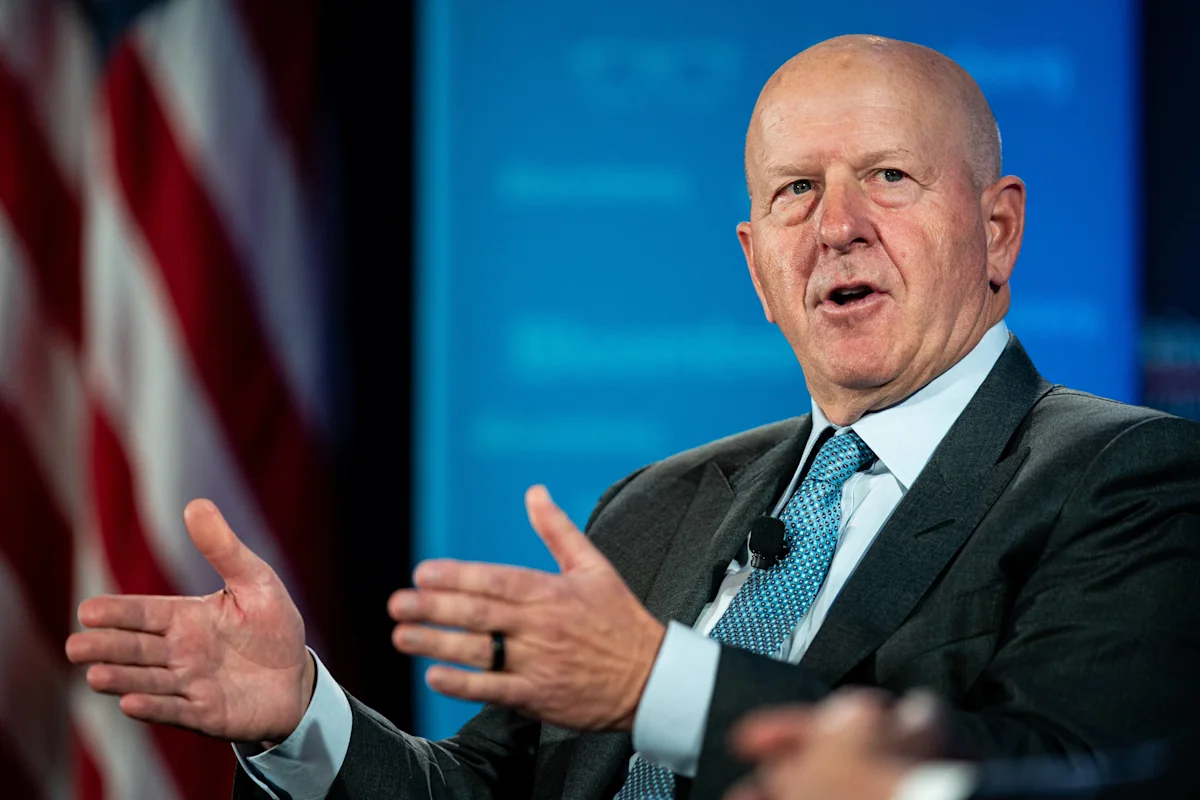
Goldman Sachs’ Asset and Wealth Management division generated $16.68 billion in full-year 2025 net revenues. The division currently oversees approximately $3.7 trillion in total assets.Paul Yeung/Bloomberg via Getty Images
Why Goldman wants this business, the revenue strategy behind the mandate
My read of the Goldman strategy here is this. The firm’s financial disclosures also make it explicit.
Goldman’s Asset and Wealth Management division generated $16.68 billion in full-year 2025 net revenues, including a record $11.54 billion in management and other fees, according to the 2025 Annual Report.
That fee revenue has grown at a 12% compound annual growth rate since 2021. The division oversees approximately $3.7 trillion in total assets, according to Goldman Sachs.
The attraction of OCIO mandates is the revenue profile. Long-term institutional mandates generate steady, recurring fee income that does not fluctuate with trading volumes or deal flow.
Goldman’s trading and investment banking revenues are inherently volatile. Growing the fee-based asset management business creates a structural buffer against those swings.
In Q1 2026 alone, Goldman reported $62 billion in long-term fee-based net inflows, marking the firm’s 33rd consecutive quarter of positive long-term inflows, according to the Q1 earnings presentation.
Net revenues in Asset & Wealth Management were $4.08 billion in Q1, up 10% year over year, with management and other fees reaching $3.08 billion, according to the Q1F26 report.
Now, do I think Goldman Sachs can sustain the momentum of securing massive mandates like the $70 billion Verizon and Lockheed? Of course, yes.
It’s clearly evident that the mandate is layered onto a business already managing $480 billion in OCIO assets.