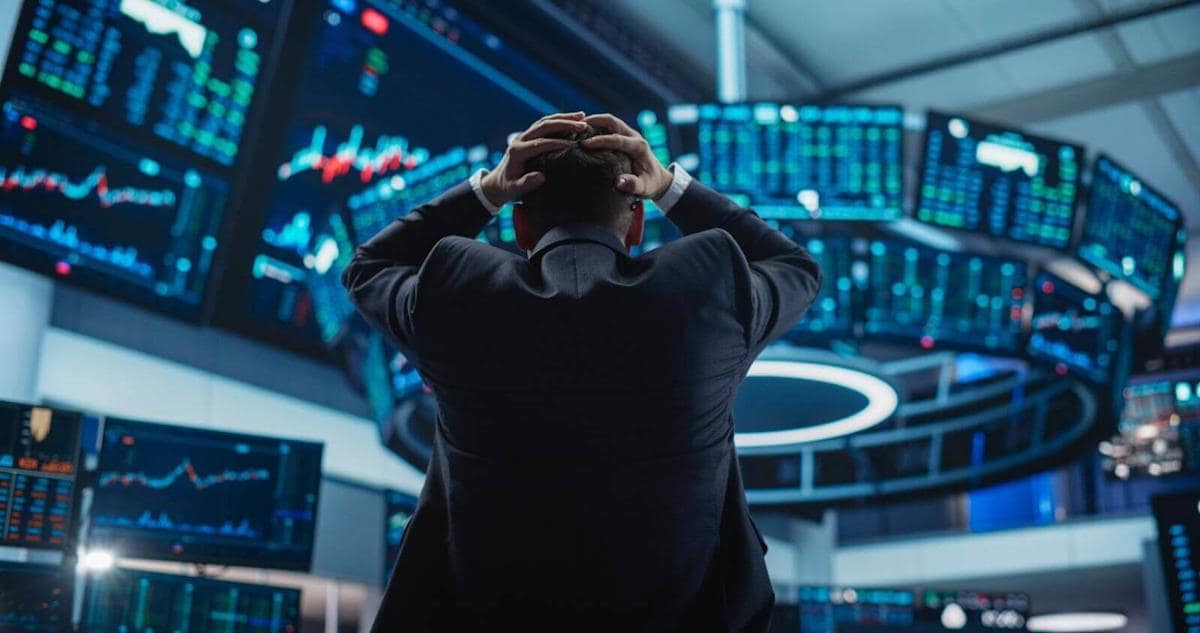
The U.S. stock market is experiencing a rather painful correction, and the selloff has hit not only the overheated tech sector but also defensive assets like gold. On the surface, the factors are quite obvious: May inflation jumped to 4.2% amid the Iran war and rising oil prices, and the market’s overbought status has long demanded a pullback.
But it would be a mistake to blame the current drop solely on macroeconomics or geopolitics. I believe the main nerve of the selloff is the upcoming Federal Reserve meeting. The market is frankly afraid of uncertainty and simply doesn’t know what to expect from new Fed Chair Kevin Warsh at his first meeting as head of the central bank.
More News from Barchart
The essence of the current nervousness is that, for the first time in decades, institutional continuity on Wall Street has broken down. Previous transitions of power at the Fed went smoothly — new leaders didn’t erase the legacy of the old ones, and policy changed evolutionarily. Now, the situation is different. A person with completely new views that sharply contrast with Jerome Powell’s is taking the chair. For algorithms and large funds, such a break in the template is a reason to move to cash first and figure out the nuances later.
However, if we deeply dissect this fear and look into the mechanics of how the Fed works, it becomes clear that investors’ worries are exaggerated.
Why Warsh Won’t Hike Rates
Markets are painting the new Fed chair as a radical “hawk.” Investors fear that, against the backdrop of a strong labor market and an inflation spike, he will take a hardline stance or even hint at rate hikes. But it’s enough to remember the context of his appointment. President Donald Trump has publicly demanded lower borrowing costs for businesses many times. The new chief was definitely not put in this post to choke the economy.
Moreover, the new chairman’s economic philosophy implies that his stance on the baseline rate going forward is actually more “dovish” than before. Warsh simply intends to use completely different mechanics of stimulation, shifting the focus from the rate to the balance sheet.
Liquidity Mechanics: The Reserve Squeeze Hypothesis
Warsh’s main gripe with the Fed’s “old guard,” which he has repeatedly voiced publicly, is the massively bloated balance sheet. He has harshly criticized the practice where the central bank de facto subsidizes Wall Street by paying interest for doing nothing.
Right now, giant commercial bank reserves — about $3.1 trillion — lie as dead weight in Fed accounts. The central bank pays a risk-free interest on reserve balances (IORB) rate of 3.65%. The Fed itself created a trap where it is more profitable for banks to keep trillions at the central bank than to lend on the interbank market or buy bonds.
Officially, Warsh hasn’t published a step-by-step plan to solve this problem yet. However, analyzing his macroeconomic approach, I would venture to guess that the main tool will be squeezing this capital back into the economy.
How might this work in practice?
If the Fed makes holding reserves unprofitable (for example, by lowering the IORB rate), banks will have to take their trillions and look for yield on the open market. This excess liquidity should inevitably flood into government Treasury bonds. In turn, massive demand for Treasuries will lead to a drop in their yields. And as soon as government bond yields fall, rates on mortgages, auto loans, and corporate borrowing will creep down following them.
This way, the Fed will be able to implement its philosophy. It can start shrinking the balance sheet (QT), but at the same time soften financial conditions in the country without resorting to the printing press or a direct cut to the main baseline rate at the moment.
Of course, we don’t know for sure how everything will actually play out. Whatt I’ve written above are just my own assumptions.
Fear of Unconventional Methods
It is exactly this unknown that is weighing on the markets the most right now. Algorithms and institutions are used to straightforward and understandable actions: If the Fed wants to ease policy, it cuts the rate and buys assets. If it wants to tighten, it raises the rate and shrinks the balance sheet.
The new Fed chair is breaking this familiar paradigm. Warsh wants to do two seemingly mutually exclusive things: lower rates while shrinking the balance sheet. This is a completely different approach. To achieve this goal, Warsh might employ unconventional methods that Wall Street isn’t used to, which the broader market isn’t even guessing at right now.
Investors aren’t so much frightened by the new Federal Reserve chief himself but by the fact that the rules of the game are changing, and old forecasting models may no longer work. However, if we put emotions aside and carefully trace the essence of his position, the conclusion is unambiguous. Based on his ultimate goals, Warsh looks much more “dovish” and focused on economic growth — with less regard for inflation — than the previous administration.
Conclusion
The market has lumped everything together right now, overestimating the fear of a hardline scenario. Investors are afraid the Fed will simultaneously cut the balance sheet and keep rates high, even though this fundamentally contradicts the very logic of the new leadership.
The new Fed chair’s methods might turn out to be completely different, but I believe their vector will be aimed at stimulating growth and supporting business. Exactly how this paradigm will be packaged into official statements, we will find out next week. For now, investors should be patient. Market turbulence may persist in the coming days, but after the first Fed meeting, when the veil of uncertainty drops, the markets could sharply reverse upward.
On the date of publication, Mikhail Fedorov did not have (either directly or indirectly) positions in any of the securities mentioned in this article. All information and data in this article is solely for informational purposes. This article was originally published on Barchart.com