Updated ,first published
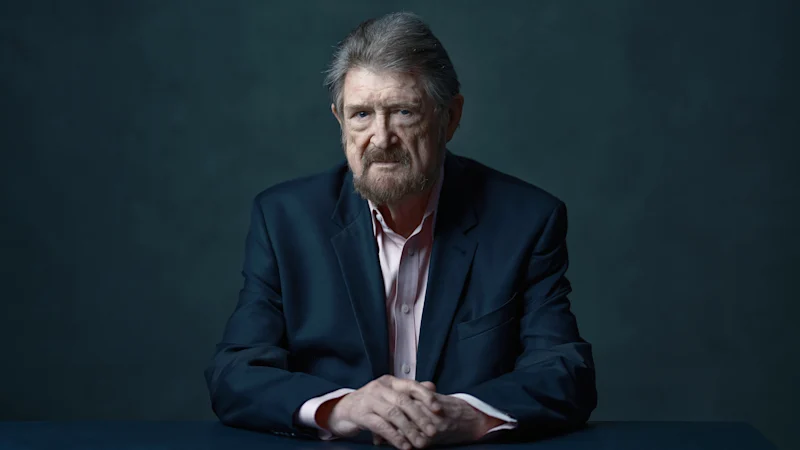
Derryn Hinch was a man of contrasts to the end. Though he’d long been prepared for the death that finally came for him some time between 4am and 5am on Friday as he lay sleeping in his bed at home – just the way he’d wanted it – he couldn’t stop himself from embracing a kind of blind optimism about what might be to come.
“One of his friends told me they contacted him last night to see how he’s going,” former colleague and sometime rival Neil Mitchell told this masthead on Friday afternoon. “And he said, ‘Well, make sure you get me a Powerball ticket tonight’. He was obviously looking ahead to the future.”
Tributes poured in on Friday afternoon for the veteran broadcaster, bon vivant and sometime senator, who has died, aged 82, after a long battle with a series of infections arising from a bad fall last year.
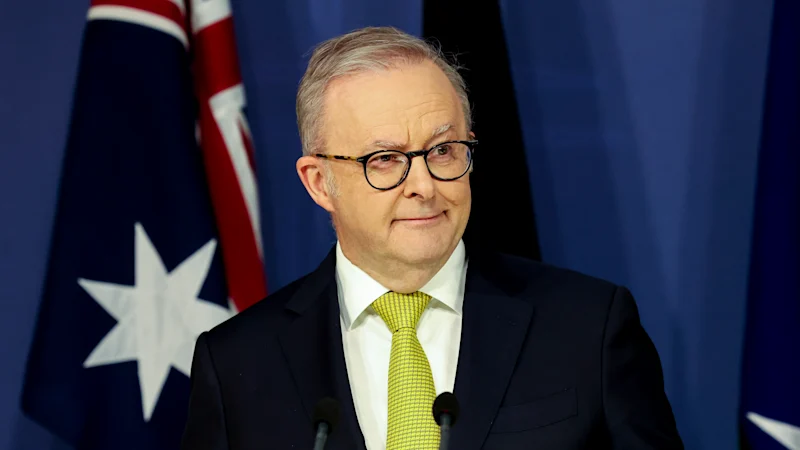
Prime Minister Anthony Albanese was among those who paid tribute to Hinch on Friday. “Derryn Hinch lived a life rich in colour and free from fear,” Albanese wrote on X, formerly Twitter.
“As an interviewer, investigator and presenter he was much more than ‘the Human Headline’. He had a sense of the deeper story and the courage to cover it, come what may. He held to those same instincts as a senator and he fought illness with that same bravery. My sincere condolences to his family and his many friends.”
Shane Healy, former station manager at Melbourne’s 3AW, was Hinch’s boss during his final stint at the station.
“He was as passionate and as focused a broadcaster as you’d probably ever meet,” Healy said of the former Drive host. “He was never prepared to be second-best ever.”
Healy had the unenviable task of firing Hinch in 2012. “When I had to tell him time’s up, he had just interviewed [astronaut] Buzz Aldrin,” he says. “He came in just completely on a high, because the interview had been outstanding, and I’m trying to tell him we’re not going to be renewing your contract. He didn’t take it all that well.”
Mitchell remembered his former 3AW stablemate and sometime rival as a man driven by principle who nonetheless “saw it as a nice little side-benefit if he got some attention”.
“He was clickbait before we had clickbait,” he said. “He believed in what he was doing. There was never any doubt about that, but he was a headache for the managers and a dream for the lawyers in the end.”
Though it was “sad, of course” that Hinch had died, Mitchell said Hinch had been ready for it for some time. “He was in a lot of pain. His movement was restricted. He’d had a number of falls, which were close to disastrous. He’d been telling friends that he wanted to die.”
He finally got that wish early on Friday morning, in bed at his Melbourne home. The only thing that might have made him happier was the attention he’s receiving now. “He’d love this,” says Mitchell. “He’s a headline ’til the end. He’d probably say ‘That’s life, that’s death’.”
Veteran journalist Ray Martin got to know Hinch when they worked for rival media outlets in New York in the 1970s: Martin with the ABC and Hinch with Fairfax.
“We competed but we played up as well,” Martin said. “I’m a huge fan; I think he was a tabloid journo in the very best sense of the word. Tabloid journalism has got its place and he was the very best I ever came across in terms of his sense of story and his writing style. I’ve never seen anyone who loved scoops as much as he did…”
When Hinch learned that fugitive train robber Ronnie Biggs was being held in a Brazilian jail, Martin recalled, “he told nobody, jumped on a plane – I think he flew first class – talked his way into the prison and spoke to Ronnie through the bars. It was one of the greatest jobs of his life”.
In an interview with A Current Affair in November, Hinch said he had had 30 falls in the preceding 12 months, one of which left him lying on the floor of his St Kilda Road apartment for 12 hours before help arrived.
He suffered two broken ribs in that incident in September, and the after-effects lingered for the rest of his life, sending him back to the nearby Alfred hospital for multiple extended stays.
In his frequent posts on Facebook, Hinch kept his friends and followers apprised of his health (declining) and his diet (tending to the mushy) while maintaining as much of an upbeat attitude as a man who had endured cancer treatment, heart surgery, an infected leg and a liver transplant could muster.
Hinch’s final Facebook post came just hours before his death. It was a photograph of his brother, captioned with: “A casual pic of my brother Des who is usually very earnest.”
As news of Hinch’s death broke on Friday afternoon, the post attracted a stream of comments lauding him as a “fighter” and “inspirational”, and a man who “spoke out even when you were silenced” – a reference to his refusal to be bound by the law when it came to naming and shaming those he believed were guilty of sexual crimes, particularly against children, even if it meant going to jail (as he did for 12 days in 1985) or being placed under house arrest (as he was in 2011 and 2012).
“That’s life” was his famous sign-off during decades on television and radio. And death, in his view, was an unavoidable part of it.
“This would be a great place to cark it,” he said of his balcony overlooking the grounds of Melbourne Grammar. “Sitting in that chair, staring at the clouds. Goodnight nurse, goodbye world.”
Scathing though he was of politicians, Hinch considered being a senator one of the greatest achievements of his long, storied and frequently controversial career. And no longer being a senator, after he failed to be re-elected at the 2016 poll having served a single half term of three years, was one of his greatest disappointments.
“Being voted out was one of the most terrible days of my life,” Hinch told ACA’s Martin King last year.
For a while, Hinch was perhaps better known via caricature than for his actual career, thanks to Steve Vizard’s parody of him on Fast Forward, where the eyebrow-jerking, fast-talking, squawking, twitching Hunch, as he was known, did his best to incite outrage with every monologue.
Nonetheless, the real man’s career was long and noteworthy.
Born in New Plymouth, New Zealand in 1944, Hinch began in journalism at The Taranaki Herald in his home town aged just 15.
Three years later, he moved to Sydney, joining The Sun, the afternoon tabloid sibling of The Sydney Morning Herald. It was the start of a long stint with the Fairfax group that took him to New York for 11 years, where became bureau chief, before returning to Sydney in 1976 to edit The Sun.
It was on radio, though, where Hinch really found his voice, literally and figuratively. He moved to Melbourne to host the morning show on 3XY in 1978 before jumping to rival 3AW the following year.
After eight years as one of the talk station’s major draws, he moved to television in 1987, where “the mouth from the south” as he was known to northern viewers (and “the beast from the east” to those in WA) met with mixed success. The short-lived panel show Beauty and the Beast was followed by the humbly named Hinch (first on Seven, later on Ten), and a short spell as host of Nine’s The Midday Show.
Peter Meakin, who spent five decades leading news and current affairs coverage at the Seven, Nine and Ten networks, said Hinch was “fearless and good company”, and that his death was a loss to the industry.
“He’s just one more character who’s gone from the information business. I won’t say news business, because Derryn was a lot more than just news. But in the information business, there’s not too many colourful characters left. I think the television networks would prefer it if everyone drifted towards beige. And Derryn was always the opposite of beige,” Meakin said.
“He was unashamedly himself and he was unique. There was no one quite like him on Australian television at the time.”
Hinch was married to four different women over the course of his life, including actress Jacki Weaver, whom he wed in 1983. They separated the following decade before reuniting and renewing their vows. By the late 1990s they had divorced, but remained close friends and were often in daily contact. Hinch had previously spoken of being a stepfather to Dylan Walters, Weaver’s son with producer John Walters.
On Sunrise in 2015, Hinch clashed with One Nation leader Pauline Hanson when she said he knew nothing about raising kids. “My stepson was with me from the age of nine till 21, which are pretty formative years, and I resent anyone telling me that I did not have a child,” he said.
“That’s fine but you have no idea from that to nine years of age telling someone who’s had four children,” Hanson said. Hinch said: “He was my stepson. I’m very proud of him. He’s turned out very well, and I’ve got some wonderful grandchildren with him.”
Hinch was never short of an opinion, and even less often short of the energy required to express it, in print, on screen, on air – in whatever format was available to him. He published more than 20 books (many of them memoirs); he was podcasting until 2022; and he was still penning the occasional article until late last year.
Though he was frequently depicted as a shock jock, Hinch’s views weren’t easily characterised as overtly, or only, right wing. He supported Indigenous rights, though he voted no in the referendum; he advocated for animal rights, though he ate meat; he was a tireless campaigner for harsher prison sentences for paedophiles and men found guilty of violent crimes against women; he backed a hard-line law-and-order approach, but the two members of his Justice Party who served in the Victorian parliament from 2018 to 2022 voted with the Andrews government more often than not.
He was, in short, a complex, sometimes contradictory, often curmudgeonly presence in public discourse, and he will be missed. That’s life.
Start the day with a summary of the day’s most important and interesting stories, analysis and insights. Sign up for our Morning Edition newsletter.
 Michael Lallo is a senior culture writer at The Age and The Sydney Morning Herald.Connect via X or email.