There is an early moment so brutal in Hugh Jackman’s new film – a revisionist take on the legendary outlaw Robin Hood – that you wonder how he channelled so much dark fury for the performance.
“I have a lot of repressed rage,” the New York-based Australian star says via Zoom. “You’d think by now, after playing Wolverine for 25 years, I might have exorcised some of that, but it’s clearly all still there.”
Even if he is joking, Jackman’s role is so much darker than anything he has worked on for a while: a Neil Diamond impersonator in Song Sung Blue (2025), a kind shepherd in surprise hit The Sheep Detectives (2026) and, until last week, a tree surgeon falling in love in New Born on an off-Broadway stage, which The New York Times raved about as “charmingly relatable and lightly comical”.

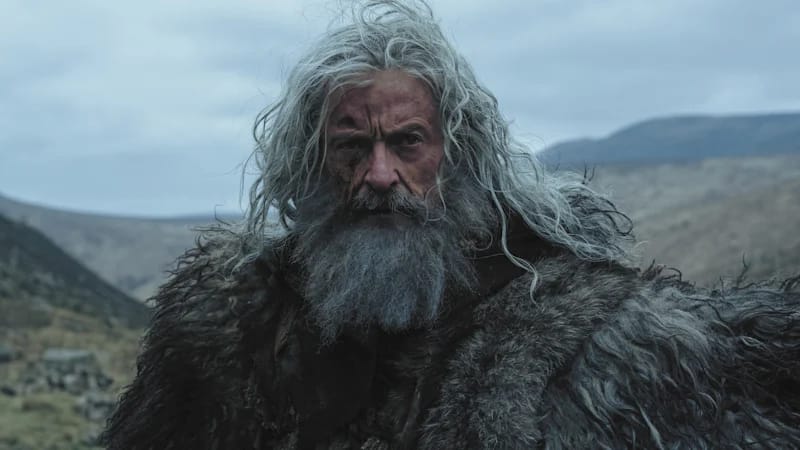
Actors shape-shift constantly but Jackman, even at 57, still seems more like the heroic Robin Hood than the monstrous outlaw he plays in The Death of Robin Hood – a cold-hearted killer coming to the end of his life, weary from too many murders, struggling with decades of pain.
In a last battle alongside Little John (Bill Skarsgard), he is gravely injured and taken in by a benevolent prioress, Sister Brigid (Jodie Comer) in a remote religious community, where he meets an enigmatic leper (Murray Bartlett) and a traumatised girl, Little Margaret (Faith Delaney).
It’s a film that subverts the classic hero that a swashbuckling fellow Australian Errol Flynn made famous in The Adventures of Robin Hood (1938) almost 90 years ago, establishing such classic elements of the legend as his robbing from the rich and giving to the poor, his archery skills, a band of merry men that includes Little John, Will Scarlet and Friar Tuck, his love for Maid Marian and the villainous Sheriff of Nottingham as his enemy.
Sean Connery, Kevin Costner, Cary Elwes, Russell Crowe and Taron Egerton are among the many actors who have played the character since then.

This time round, there is nothing heroic, romantic or swashbuckling about Robin Hood. He is a loner in the 13th century. No merry men. No robbing from the rich and giving to the poor. No Maid Marian. Just a character whose fierceness, is, for Jackman, closest to his ageing Wolverine in Logan (2017).
Ditching everything legendary goes against that great line from the classic Western The Man Who Shot Liberty Valance (1962): “When the legend becomes fact, print the legend”. When it comes to Robin Hood, that legend has sold a lot of movie tickets.
The Death of Robin Hood was written and directed by American Michael Sarnoski, who made his name with the Nicolas Cage drama Pig (2021) then followed up with hit horror film A Quiet Place: Day One (2024).
While Sarnoski thinks there was probably never a real Robin Hood – “he was probably an amalgamation of a few different people” – the story was told initially in oral stories then in early ballads from the 14th century.
The genesis of the film – the latest release from the buzzy American independent distributor A24 – goes back to Sarnoski’s childhood. The headmaster of his school gave the future filmmaker his own 1940s edition of Robin Hood when Sarnoski’s father died when he was nine. He knew they used to love watching Disney’s animated Robin Hood (1973) together.

Sarnoski describes it as a way of saying “hey kiddo, I know this was important to you and your dad” as the headmaster became a mentor to him. He loved the stories , especially a brief ballad about Robin’s death at the hands of a prioress.
“Grappling with the loss of my dad and understanding a symbolic male figure can die like any human being, having to deal with all of that” left a vivid impression, he says. “I knew that if I ever made a Robin Hood movie, it would probably be about that story.”
To Sarnoski, it feels more truthful about life in the 13th century than the traditional account.
Jackman can’t remember ever being offered the chance to play the heroic Robin Hood.
“When I was at drama school, I used to love the fencing classes,” he says. “I would still love to do a little bit of that, maybe a Princess Bride kind of role. But this script just came and it was undeniable and then I saw Michael’s film Pig. I was 10 minutes into it and I just said ‘I’m doing this movie’.

“But I kind of knew I was doing it anyway. It was just a beautiful script. What I loved about it was the ending didn’t go to the place I thought it would go. It went to some beautiful, meditative place. It felt very human in its greyness, in the nuance of it, and the connection between Jodie’s character and my character.”
Jackman thinks there is something spiritual about the film’s late stages, particularly in the connection between his and Comer’s characters. The two had briefly worked together on a “dance bootcamp” for a film that sounds fascinating but was never made: they would have played Fred Astaire and Ginger Rogers.
While the times seem ripe for another classic telling of the legend – robbing the mega-rich tech barons to give to the rest of us – The Death of Robin Hood leaves readers in no doubt that this is a different version with a bloodthirsty action film opening.
“I tell you, those action sequences, that’s the tiredest I’ve ever been on a film set,” Jackman says. “They were brutal. There was about a foot of mud. It was winter, Ireland, and it was hardcore. But it was awesome and I loved it.”
The hair and make-up team, Sean Flanigan and Pamela Westmore, came up with the character’s grizzled look.
“We were sitting in the trailer of Song Sung Blue and we were playing around with ideas,” Jackman says. “We wanted to have a look that could be very much like a hermit at the beginning, unrecognisable, like a cave dweller, that could then clean up a little bit, so we could feel some transformation or that he’s had some sort of care.”
When Jackman first donned the look, Flanigan’s response was “hello hot Santa”.

Sarnoski concedes there is a risk that the tough opening will alienate audiences.
“If you come into this movie thinking you’re going to see a fun, action-adventure thing, we want you to know ‘no, no, no we’re treating this violence in a realistic way’,” he says. “We want this violence to feel unpleasant and difficult to watch.
“We need to set that up for Robin’s character. He came from a brutal world. His life was filled with violence. That’s what he’s grappling with for the rest of the movie. It had to be like ‘we’re landing the violence and we’re going to land the meditative side’. Both co-exist through this character in an honest way.”
Given audiences are introduced to Robin in his 40s or 50s, could he have started out as a noble, heroic figure in, say, his early 20s before being broken down by decades of pain? In other words, was he once the traditional hero?
”No, I don’t think there was ever a cheery, dancing-in-the-woods version of Robin Hood,” Sarnoski says. “But even in our version he probably doesn’t fully remember what his life was like, although he definitely remembers the violence and the darkness.
“There are some moments later on where he’s reminded of things that he had chalked up to myth. In my mind, he was a leader of child soldiers. He was recruiting young men and using stories to get them to commit violent acts.”
Sarnoski points to another layer of the film: “It’s about the stories we tell ourselves about ourselves and the stories we tell other people.”
Jackman thinks we need heroic outlaw stories like Robin Hood or, in Australia, Ned Kelly.
“Michael gave me a couple of books to read, which I found fascinating,” he says. “[Originally Robin] was just an out-and-out bad guy.”
But the character morphed as times changed and the idea took hold “that maybe the royalty and the landed aristocracy weren’t such good guys. All of a sudden, this outlaw bad guy cautionary tale becomes this folk hero who steals from the rich and gives to the poor”.
And then, centuries later, Errol Flynn came along. The legend started selling tickets.
The Death of Robin Hood opens in cinemas on June 18.