It is indeed a weird time to be an automaker, as US federal incentives disappear and support dwindles for newer electric-powered cars. “Manufacturers would really like to know what the future will be and what are the rules,” says Mike Finnern, the senior vice president and zero-emission fleet lead at WSP, a consulting firm. Guarantees of large, future orders from fleet managers like city governments, but also private businesses, “will help them be stable for a while.”
EVs are a nice fit for government fleets, Finnern says. Surveys suggest that regular car buyers are still plenty apprehensive about shifting to a plug-in from gas cars they’re used to, and they want cars with even longer ranges, even if they seldom use the whole battery. But governments know exactly how their vehicles are used, can more precisely control charging, and are able to see that today’s ranges of 250 to 400 miles per charge fit their needs fine. Plus, EVs might help governments save money on fueling and maintenance. Private operators like Amazon aren’t stopping their forays into EVs, and “they wouldn’t do it if it didn’t pencil out,” he says.
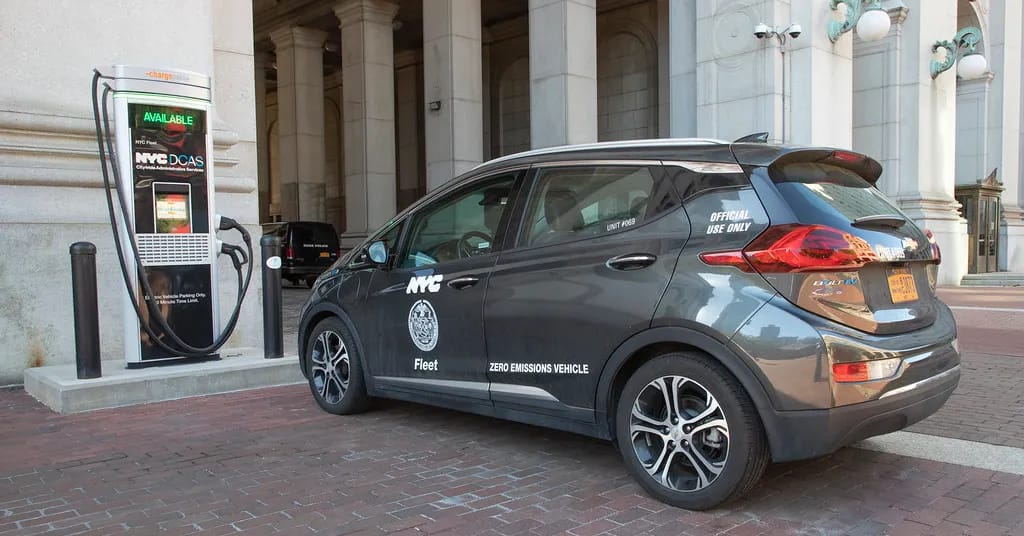
“I regret every electric and hybrid vehicle we haven’t bought yet,” says Kerman. “It would’ve shielded us from the doubling of fuel costs that we’re now enduring.” By partnering with the US Department of Transportation, his agency has found that switching to battery electrics improves New York City’s vehicle energy economy by 6 percent.
Still, both governments say they have plenty to learn about how and where EVs fit best and that the partnership will help them share and create best practices so that other cities might eventually follow.
One big takeaway from the government’s experience so far is that officials need to be proactive and mindful about getting city workers on board. There are technical challenges—maintenance workers need to be retrained to maintain EVs instead of gas-powered vehicles, and everyone needs to remember to plug them in—and trickier morale ones, too.
Workers don’t always appreciate sudden changes. And while New York’s data suggests that the intelligent speed assistance built into many of its new EVs reduces speeding and possibly crash severity in city vehicles, employees have lingering worries about workplace surveillance. (In March, the city workers’ union reached an agreement outlining how data collected from city vehicles might be used in disciplinary actions.)
A workforce that’s enthusiastic about EVs can make all the difference. “We’ve seen some deployments be really successful and some, not so much. They have the exact same problems, but some were able to overcome them because their people were excited about it and trained,” Finnern says.

Courtesy of California Internal Services Department
Haynes, who used to work with Kerman in New York before moving to Los Angeles, recalls that he was once an EV skeptic but changed his mind once Kerman coaxed him into trying out a Tesla. It was, above all, fun.
“I will tell you, no one goes into these electric cars, walks out and says, ‘I hate this car,’” Kerman says. “They all say, ‘I love the car.”