
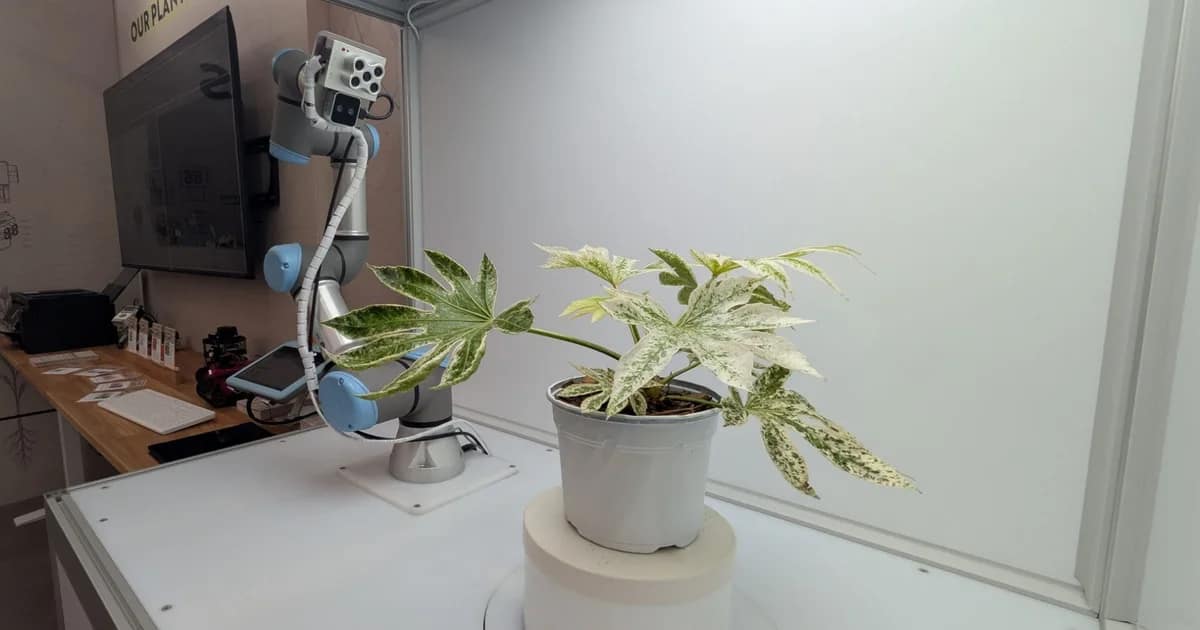
When you think of the Chelsea Flower Show, robots are probably the last thing on your mind. Yet, the University of Lincoln showed up with exactly that and walked away with a Silver Gilt medal.
The exhibit, RoboCrops: Plant Selection, Beyond the Visible, was put together by the University’s Lincoln Institute for Agri-Food Technology, or LIAT, and placed right in the show’s GreenSTEM zone. That’s the section dedicated to exhibitions exploring the intersection of horticulture, science, technology, and the environment.
What is a robot actually doing at a flower show?
The star of the exhibit was PhenAIx, a robotic system that performs what is essentially a health scan for plants. It uses advanced imaging and AI to catch subtle signs of stress, disease risk, and performance issues that your eyes would simply miss.

It’s like an X-Ray or MRI machine, but for crops. It can help plant breeders identify more resilient crops more quickly than traditional methods. The exhibit was quite popular, and even the Mayor of London, Sadiq Khan, stopped by to discuss how this technology could eventually scale to tackle wider food production challenges.

The University is clearly hoping the exhibit plants a seed, so to speak, with young visitors. Particularly those from rural and agricultural backgrounds who might not naturally picture themselves working in AI or robotics. Professor Simon Pearson MBE, Founding Director of LIAT, said the curiosity from young visitors was one of the most rewarding parts of the whole week.
What does this mean for the future of food?
The exhibit showcased how collaboration across STEM disciplines can be helpful in finding solutions to our food crisis. The idea here is to help breeders find stronger, more resilient plant varieties faster than traditional methods allow.
Varieties that can handle more heat, survive drought, and thrive with fewer resources have a better chance of surviving the climate we are creating through global warming. Given where global food security is heading, that matters a lot.